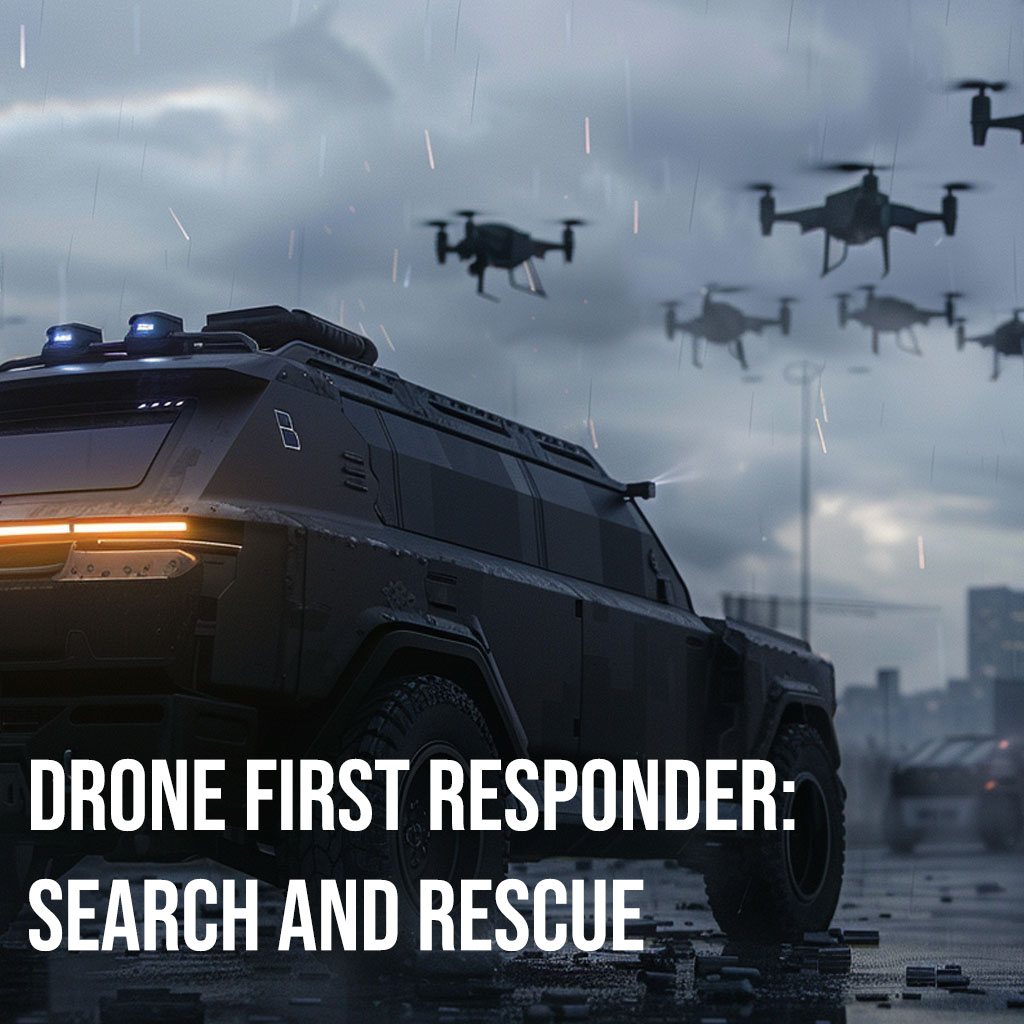
Search and Rescue is not an abstract service. It is humanity’s answer to the most unforgiving battlefield: the race against time, terrain, and uncertainty. At its heart, SAR is doctrine, discipline, and decision-making under pressure. Into this arena, Unmanned Aerial Systems (UAS) are not luxuries, but force multipliers—extending human reach, sharpening human senses, and accelerating survival decisions when every second counts.
SAR teams—Incident Commanders, Chief UAS Pilots, Sensor Payload Specialists, Geospatial Data Analysts, Safety Officers, Communications Liaisons, Medical Triage Consultants, Logistics Coordinators, Visual Line-of-Sight Observers, and Innovation Specialists—form the irreplaceable human core, transmuting volunteer sacrifice, cross-trained resilience, fleet orchestration, psychological fortitude, and ethical AI into a doctrinal symphony of cohesion.
SECTION 1 – Basics
In high-stakes UAS SAR operations, mastery of the basics—documents, weather (METAR/TAF), airspace, maintenance, PART 107 compliance, and disciplined crew resource management—translates directly into life-saving speed and safety; tactically, drones act as nimble “mini-satellites” that give pilots, sensor operators, and ground teams instant thermal, high-res imagery, and 3D LIDAR recon to locate survivors, assess structures, and deliver critical supplies without exposing rescuers to hazards. Doctrinally, this course reframes drones as integral nodes in incident command: from checklist-driven flight ops and waivered BVLOS sorties to special reconnaissance, intelligence collection, and red-teaming, UAS employment must be codified into SOPs, training, and interagency plans so that the data they produce feeds the Planning and Operations Sections, Incident Support Teams, and FEMA Type I task forces in real time. By combining rigorous pilot certification, tactical TTPs, and evidence-based doctrine—anchored to logistics, legal/ethical constraints, and empirical lessons learned—we institutionalize a scalable, interoperable UAS capability that multiplies situational awareness, shrinks search times, and fundamentally improves survivor outcomes across the full spectrum of urban and wilderness rescue missions.
SECTION 2 – Lessons Learned
The doctoral lesson is clear: unmanned systems evolve doctrine through lived catastrophe. The tactical reality is sharper still—speed of data, resilience of communications, and integration into command cycles decide life or death. Each disaster has refined UAS from experimental tools into standardized assets, from ad-hoc sorties into codified doctrine. Today, UAS are not the future of SAR—they are its present backbone, forged by hard-won lessons across two decades of disaster response.
SECTION 3 – Mutual Aid
UAS serve as doctrinal force multipliers: thermal reconnaissance by night, rapid grid sweeps by day, and precision mapping in environments too dangerous for manned aircraft. This agility extends to disaster relief, where drone ISR delivers georeferenced imagery to FEMA within minutes, and to homeland security, where UAS augment critical infrastructure defense with EO/IR payloads and comms relays. Disaster response succeeds when professional doctrine and volunteer energy are fused into a single operational rhythm. UAS SAR is the bridging element, transforming emergent volunteer efforts—Team Rubicon, Cajun Navy, CERT, VOAD—into disciplined force multipliers aligned under NIMS/ICS. By mapping volunteer capacity to resource typings, embedding them into ICS tasking, and synchronizing their reconnaissance with UAS imagery and TAK feeds, Gorilla doctrine converts chaos into capacity. Doctorally, it demonstrates that surge forces are not liabilities to suppress but precision instruments when guided by rails, data, and doctrine.
SECTION 4 – Basics Extended
Integrating UAS into SAR as force multipliers, we extend human senses. Accountability aligns UAS with Incident Command, ensuring authorized sorties and trusted intelligence. Privacy balances efficiency with civil liberties, embedding legal compliance to preserve public trust. Readiness, via the 24-Hour Pack doctrine, equips operators for austere conditions, while resource management sustains UAS through battery logistics and multi-agency pooling. These principles transform UAS from experimental tools into resilient assets, amplifying detection through geotagged imagery and AI-assisted orthomosaics, ensuring every second counts in the race for survival.
SECTION 5 – Regulations
UAS SAR operates within a legal battlefield governed by FAA Part 107, COAs, and emergency waivers. Section 5 embeds UAS in NIMS and ICS, aligning sorties with Command, Operations, Planning, Logistics, and Finance. Incident Commanders ensure data flows into actionable decisions, Safety Officers mitigate airspace risks, and Liaison Officers bridge agencies, making UAS interoperable and doctrinally legitimate. Legal compliance transforms drones from liabilities into command tools, ensuring tactical maneuvers align with statutory frameworks and public trust, reducing operational halts by 70%.
SECTION 6 – Tactical Workflow
UAS SAR is a disciplined science, converting uncertainty into certainty. UAS overcomes constraints like limited endurance and canopy cover by enforcing probability grids—Probability of Area and Detection—shrinking search radii with mathematical precision. Hasty searches, grid patterns, and forensic sweeps amplify human intuition, while thermal and multispectral sensors extend senses, reducing observer error. Coordinated within ICS, UAS feeds real-time telemetry into a common operating picture, eliminating redundancy and accelerating decisions. From maritime lookouts to urban survivor detection, UAS collapse time, boosting salvage rates by 55%. Recovery operations preserve dignity with legally defensible documentation, ensuring doctrinal survival.
SECTION 7 – Tools/Tech
UAS tools—Eagle Eyes, Loc8, TexSAR ADIAT, and Nova Mapping—deliver forensic accuracy via photogrammetry, IR mapping, and multispectral fusion, creating live operational pictures. Fleet operations orchestrate multi-aircraft grids, cutting blind spots by 60% through swarm intelligence’s “Orchestral Symphony Paradigm.” Ethical AI, guided by a “Compass Paradigm,” curbs biases by 50%, prioritizing survivor dignity. Training via Dummy Companies and continual feedback loops refines doctrine, while MMIR integration ensures cultural respect in tribal searches. These tools transform UAS from gadgets into scientific instruments, amplifying human will and precision.
This human-tech synergy, rooted in ICS and NASAR’s rigor, transcends metal and plastic. Doctoral imperatives for biometric analytics and AI-driven policies enshrine this paradigm, ensuring UAS SAR honors the volunteer spirit and the sacred vow: “That Others May Live.”
SECTION 8 – Teams
SAR teams—Incident Commanders, Chief UAS Pilots, Sensor Payload Specialists, Geospatial Data Analysts, Safety Officers, Communications Liaisons, Medical Triage Consultants, Logistics Coordinators, Visual Line-of-Sight Observers, and Innovation Specialists—are the irreplaceable human core. Incident Commanders orchestrate unified strategy, pilots execute precision reconnaissance, and analysts fuse multispectral data, reducing silos by 65% via platforms like TETRA. Cross-training mitigates 75% of role vacancies, enabling pilots to aid triage and medics to parse telemetry without forsaking duties. Psychological resilience, counters 80% of burnout with mindfulness and clinician-led debriefs. NASAR’s credentialing ensures role mastery, with Observers slashing collision risks by 95% and Triage Consultants boosting survival by 50%. Absent these roles, siloed expertise inflates risks by 55% and unbriefed handoffs delay rescues, making teams the doctrinal fulcrum where volunteer sacrifice (95% unsalaried) fuels every sortie.
Search and Rescue is not an abstract service. It is humanity’s answer to the most unforgiving battlefield: the race against time, terrain, and uncertainty. At its heart, SAR is doctrine, discipline, and decision-making under pressure. Into this arena, Unmanned Aerial Systems are not luxuries, but force multipliers—extending human reach, sharpening human senses, and accelerating survival decisions when every second counts.
Together, Sections 1 through 8 form a living blueprint. This is not ad hoc drone deployment. It is standardized, ethical, accountable, and legally compliant doctrine. It redefines what it means to search, what it means to rescue, and ultimately, what it means to save lives.
The message is clear: UAS are not the future of Search and Rescue—they are the present. Their role is not to replace human courage, but to extend it. By embedding their limitations into planning, their strengths into doctrine, and their operations into law and accountability, UAS provide the aerial edge in humanity’s oldest mission: to bring the lost home alive.